JOS SUMMIT PUSHES NIGERIA TOWARD HIGH-VALUE LEATHER AND FASHION EXPORTS
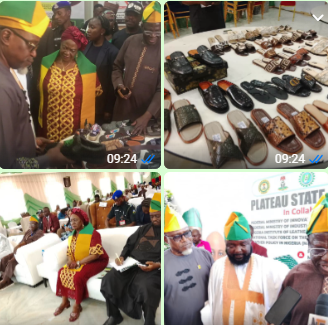
JOS SUMMIT PUSHES NIGERIA TOWARD HIGH-VALUE LEATHER AND FASHION EXPORTS. By Daju Payi Nigeria must urgently move beyond the export of raw hides and skins and develop the capacity to process, manufacture, brand and export high-value leather and fashion products, stakeholders at the National Leather and Fashion Business-to-Business Summit and Fair, Jos 2026, have said. The call formed the central message at the opening of the summit on Tuesday in Jos, which brought together government officials, industry players, researchers, entrepreneurs, designers and other stakeholders to explore opportunities for transforming Nigeria’s leather and fashion sector into a globally competitive industry. Held under the theme, “Leather and Fashion Beyond Borders: Driving Innovation, Commercialization and Global Market Access for Economic Growth,” the summit was convened by the Plateau State Government in collaboration with the Federal Ministry of Innovation, Science and Technology, Federal Ministry of Industry, Trade and Investment, Nigerian Institute of Leather and Science Technology (NILEST), National Task Force on Implementation of Leather Policy in Nigeria and Plateau State Leather and Apparel Sector Manufacturers Association. Declaring the summit open on behalf of Governor, Caleb Manasseh Mutfwang, Deputy Governor Ngo Josephine Piyo welcomed participants to Plateau State, describing Jos as a city with a long-standing tradition of leather craftsmanship. She particularly cited the historic Naraguta leather community, where generations of craftsmen have produced shoes, sandals, bags, belts and other leather products. According to her, the state government is committed to creating an enabling environment for businesses to thrive as part of efforts to build a productive, inclusive, innovative and private sector-driven economy. Piyo stressed the importance of developing the entire leather value chain, from livestock production and the supply of quality hides and skins to tanning, manufacturing, fashion design, branding and export. She also called for a deliberate shift away from the practice of exporting raw materials and importing finished products at higher costs. The Minister of Innovation, Science and Technology, Hon. Dr. Kingsley Tochukwu Ude, SAN, represented by the Permanent Secretary, Dr. Nasir Yawali Muhammad, described the summit as timely, particularly in the context of Nigeria’s efforts to diversify its economy. The Minister noted that innovation should not be associated only with emerging fields such as artificial intelligence, software development and robotics, stressing that science and technology could equally transform traditional sectors such as leather and fashion. He pointed to Nigeria’s substantial livestock resources and long history of leather production, including the highly regarded Red Sokoto goat leather, but expressed concern that the country continues to export significant quantities of raw materials while importing finished products at much higher values. He said the challenge was therefore not merely to increase leather production but to improve quality, productivity, value addition, branding and access to domestic and international markets. The Minister listed areas of federal intervention to include advanced and environmentally sustainable leather processing, biotechnology and eco-friendly tanning, smart manufacturing, digital design and 3D prototyping. He also highlighted the need for digitalisation, traceability, quality assurance, clustering, standardisation, certification and capacity development for young people, tanners, designers and entrepreneurs. He encouraged Nigerian producers to take advantage of the African Continental Free Trade Area (AfCFTA) and digital business-to-business platforms to establish direct relationships with buyers in international markets. He said the impact of the summit should ultimately be reflected in business relationships, orders, investments and technology transfers, rather than in speeches alone. The Director-General and Chief Executive Officer of NILEST, Dr. Auwal Mustapha Imam, said the summit’s theme reflected the need to reposition leather and fashion as an integrated industrial, technological and creative ecosystem. He explained that the sector has the potential to generate employment, stimulate investment and increase Nigeria’s export earnings. While acknowledging the opportunities presented by AfCFTA, Imam cautioned that access to the regional market would not automatically guarantee competitiveness. He said Nigerian producers must meet international expectations in areas such as consistent quality, standards compliance, traceability, sustainable production, branding and reliable supply. “Our objective must not simply be to produce more. We must produce better, add greater value, meet applicable standards, build trusted brands, and develop the capacity to supply markets consistently,” he said. The Plateau State Commissioner for Science and Technology, Hon. Muhammad Salihu Nyalun, said the choice of Jos as host of the summit was significant because of the state's long history of craftsmanship, agriculture and livestock production. Nyalun said the leather and fashion sector should no longer be regarded merely as an informal or traditional economic activity. Rather, he described it as an important industrial value chain with significant potential for employment generation, entrepreneurship and foreign exchange earnings, particularly among young people and women. Discussions at the summit also focused on opportunities for youths and women across the leather and fashion value chain, while stakeholders emphasized the importance of sustainability, circular economy principles and green manufacturing. Participants highlighted the need to improve product finishing, packaging, branding and certification in order to strengthen consumer confidence in Made-in-Nigeria products and make them competitive in international markets. The summit is expected to provide opportunities for networking, business-to-business engagements, technology exchange, investment discussions and market linkages among producers and prospective buyers. In his vote of thanks, the Permanent Secretary, Plateau State Ministry of Science and Technology, Mr. Peter Lamba Bot, MNI, urged participants to ensure that the summit's deliberations translate into tangible economic outcomes. He called for practical action beyond the communique, particularly in the areas of technology, sustainability, financing and standards. He said the ultimate goal should be to translate the discussions into factories, jobs, exports and sustainable businesses for the benefit of Nigerians.